CONCEPT
-
 glossary
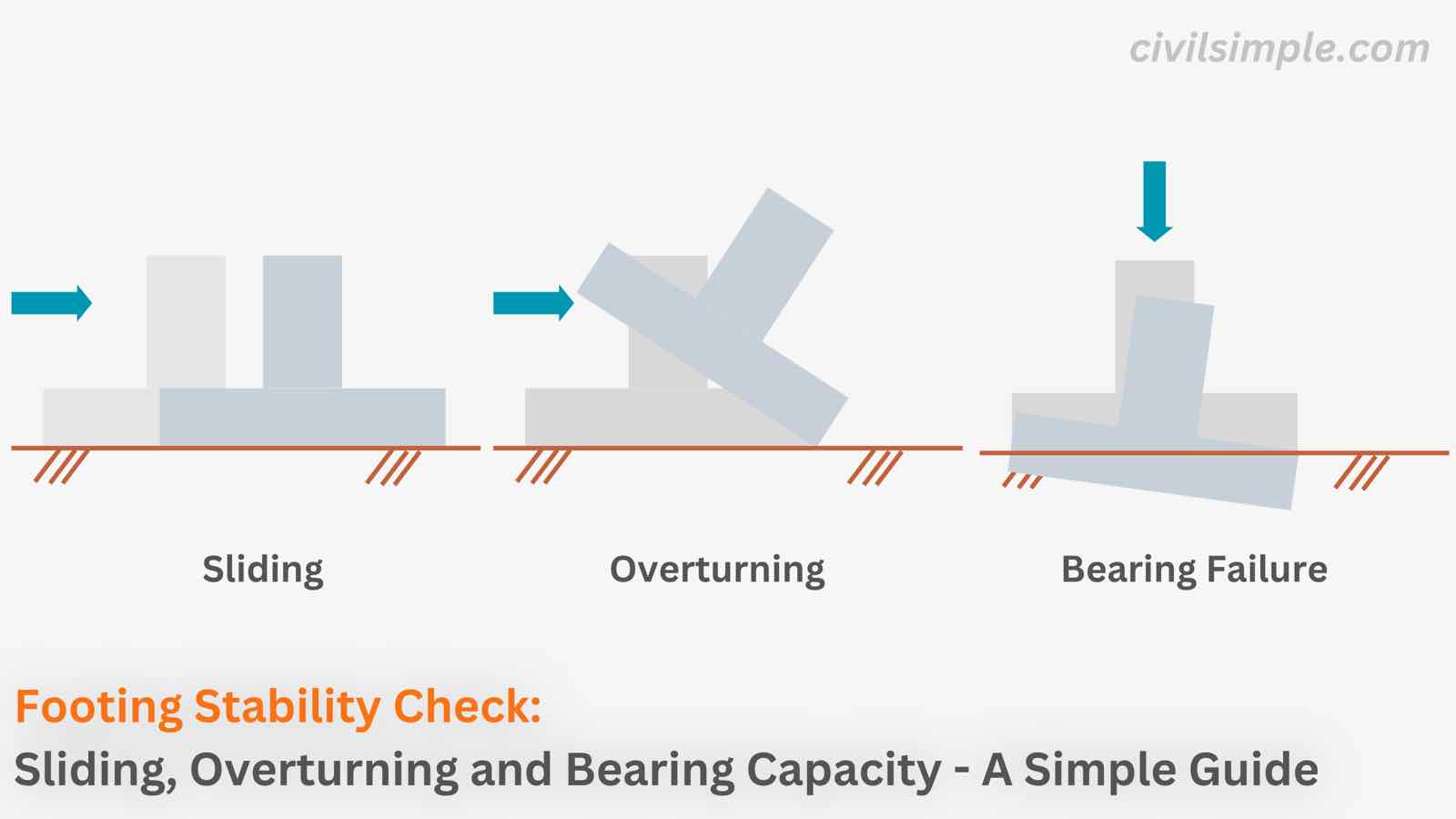
Pad Footing Stability Check: Sliding, Overturning and Bearing Capacity - A Simple Guide
A simple, code-neutral guide to the stability checks of a pad footing — the sliding check, the overturning check and the soil bearing capacity check: what each failure mode is, the formulas, typical factors of safety and a quick step-by-step calculation guideline.
-
 glossary
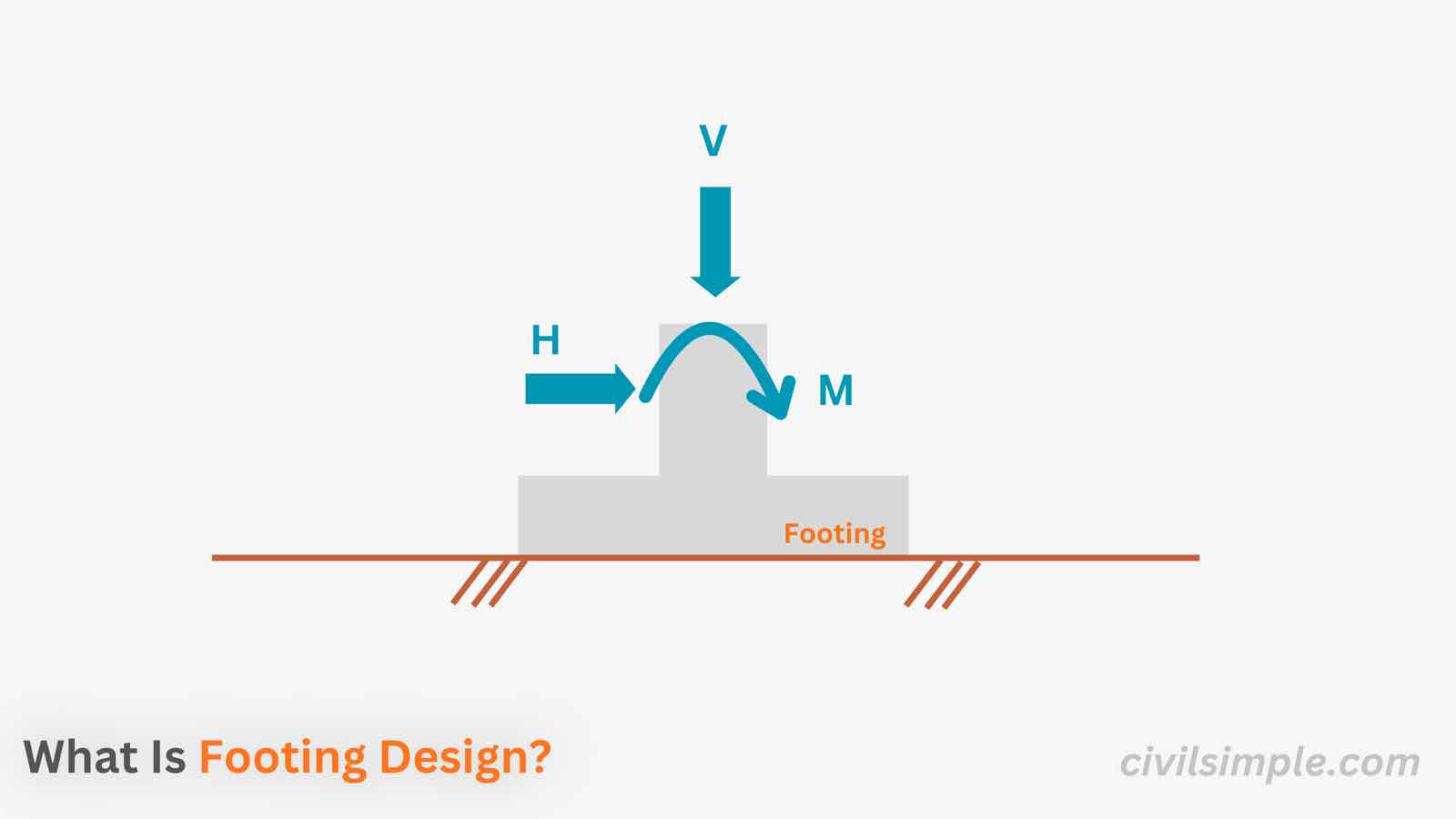
What is Footing Design?
Simple guide about what footing design is, why footings matter, the three ways a footing can fail (sliding, overturning and bearing), the factors that affect footing design and ways to reduce the risk of instability.
-
 glossary
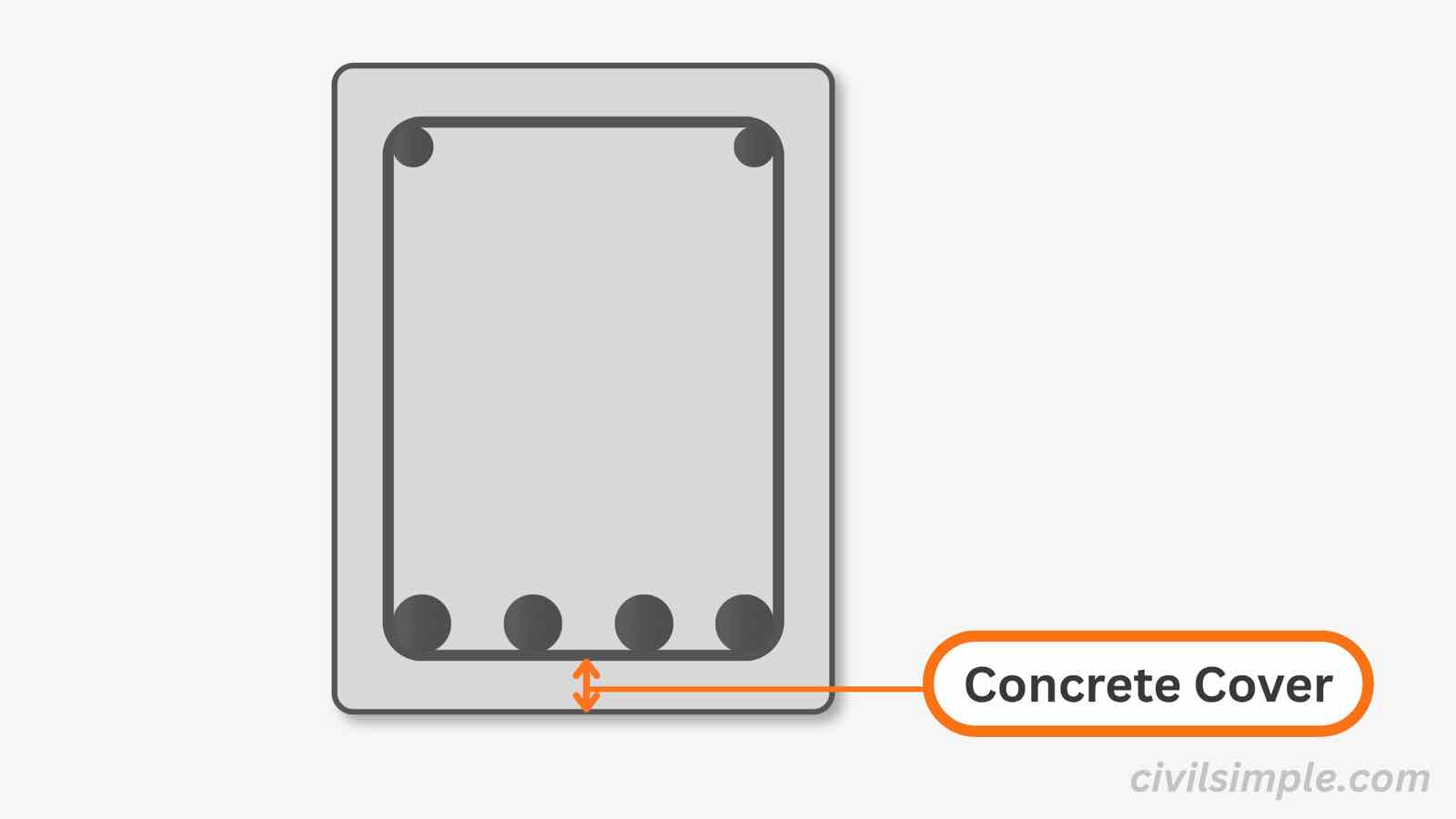
What is concrete cover in Eurocode 2
Concrete cover is the distance between outermost reinforcement and concrete surface. A must-have component for every reinforced concrete structure due to durability, fire resistance and bonding performance. Concrete cover is determined by code requirements and exposure conditions.
-
 glossary
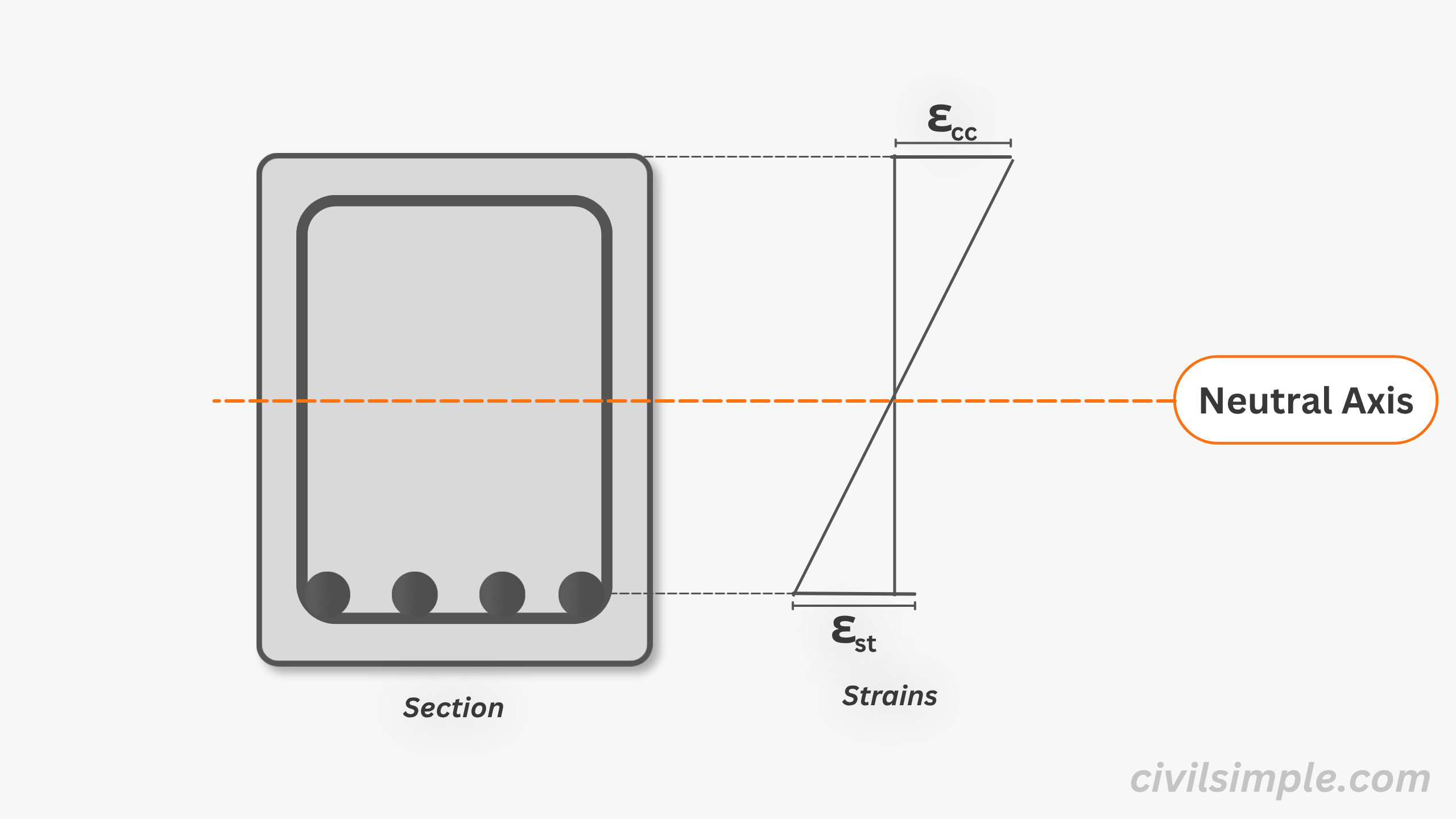
What is neutral axis?
Neutral axis is an imaginary line in a reinforced concrete section where longitudinal strain is zero. It separates the compression and tension zones, and its position depends on loading, material properties, and section geometry.
-
 glossary
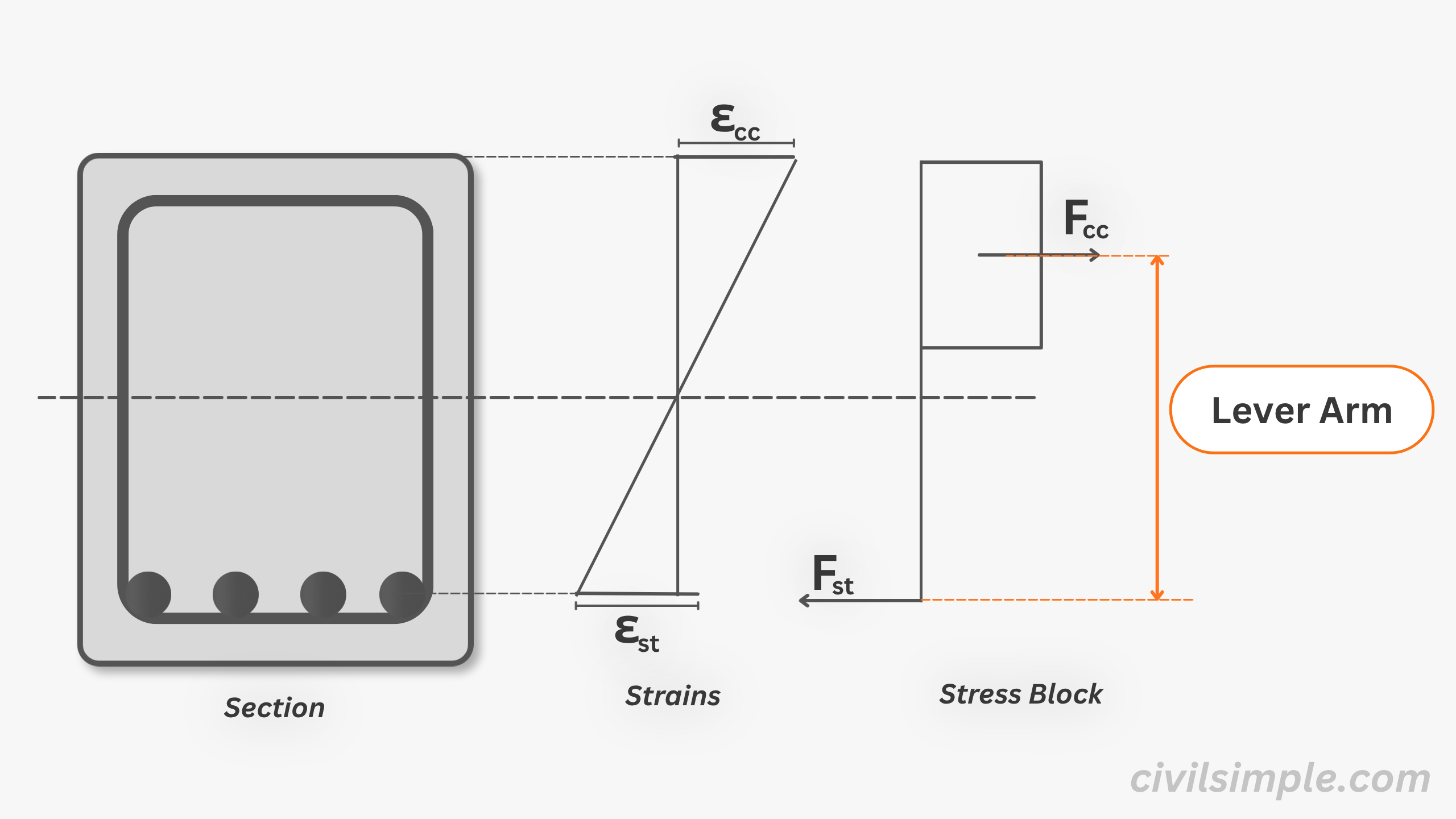
What is lever arm?
The lever arm is the distance between the centre of the compression force and the centre of the tension force acting on a section. It is a key parameter in moment capacity calculations. Understanding the strain distribution and stress–strain behaviour of concrete and steel is essential for determining the lever arm.
-
 glossary
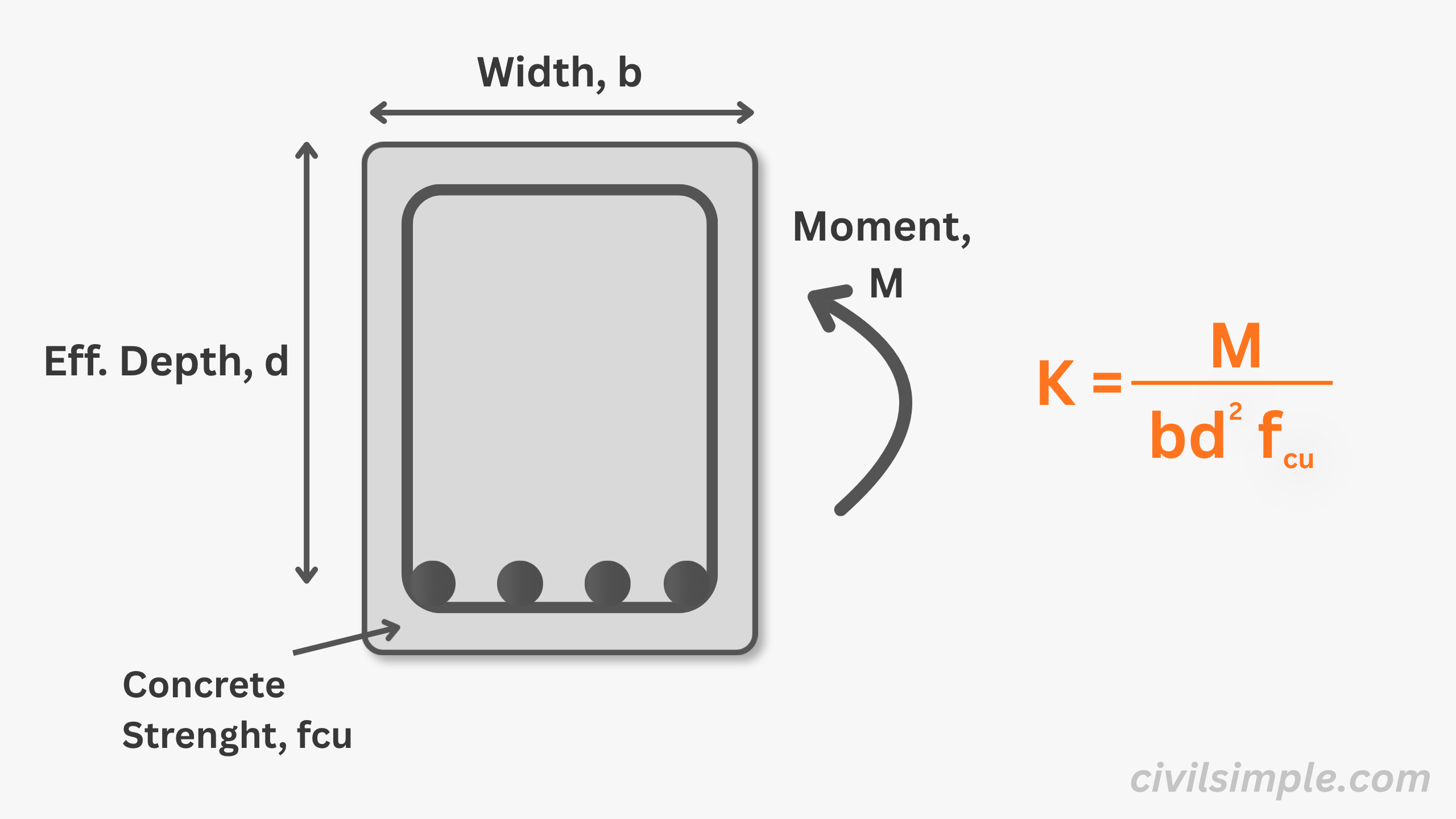
What is K coefficient?
K is a unitless coefficent defined as M/(fck • b•d²). It represents the ratio of design moment to section capacity parameters (width, effective depth, and concrete strength). It helps quickly assess whether a section satisfies code requirements, including ductility and compression zone adequacy, and provides a convenient way to determine the lever arm ratio (z/d) and hence the required tension reinforcement.
-
 assumptions
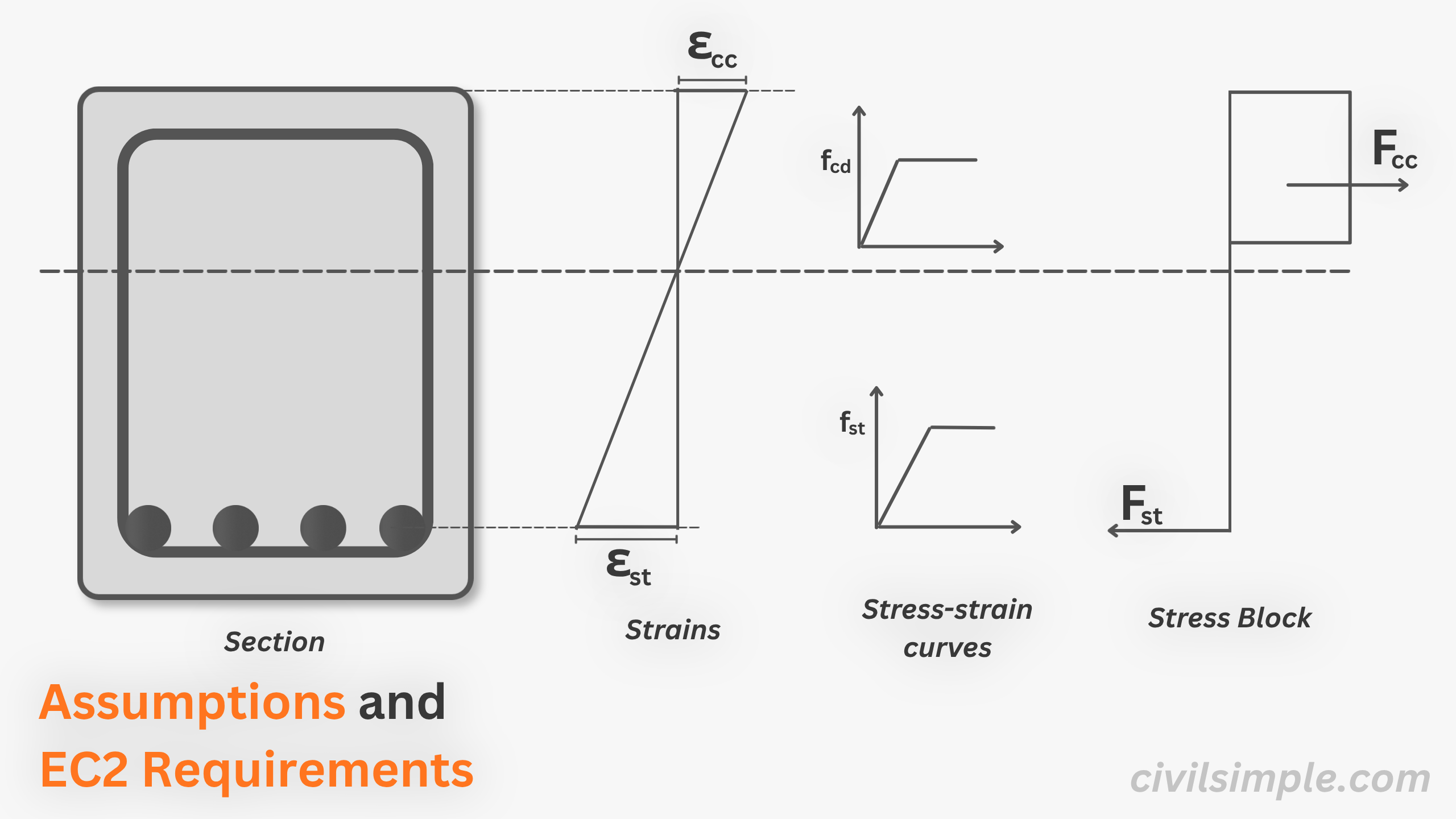
EC2 Bending Design - 6 Fundamental Assumptions and 3 Limitation
Learn the six key assumptions used in Eurocode 2 (EC2) bending design for reinforced concrete beams and slabs, including strain distribution, the stress block, force equilibrium, and ductility requirements.
-
 proof
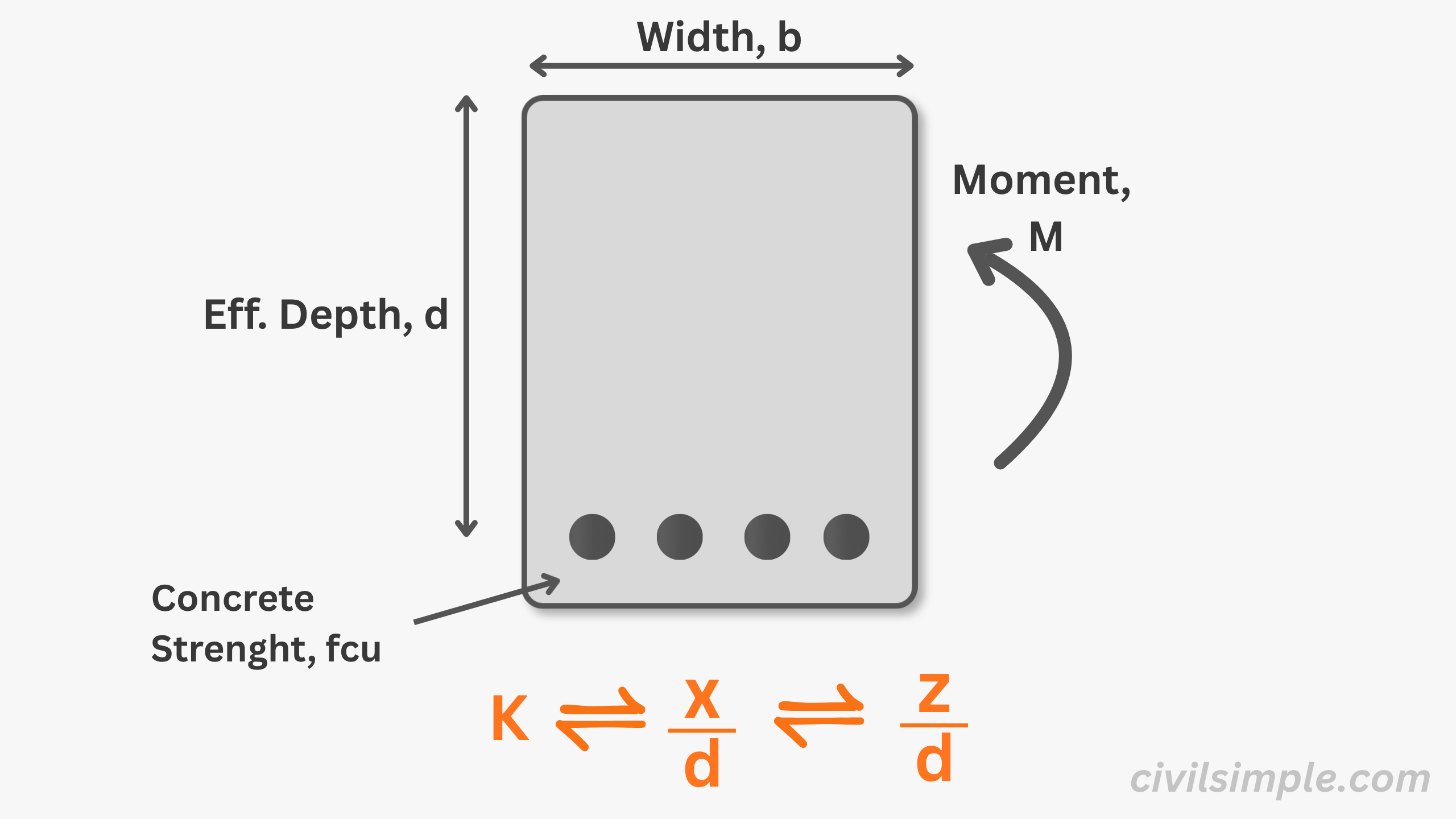
proofEC2 Bending Design - Derivation and Limits of x/d, z/d and K
Understand the relationship between x/d, z/d and K in EC2 bending design. Learn how these equations are derived and why their limits are important.
-
 proof
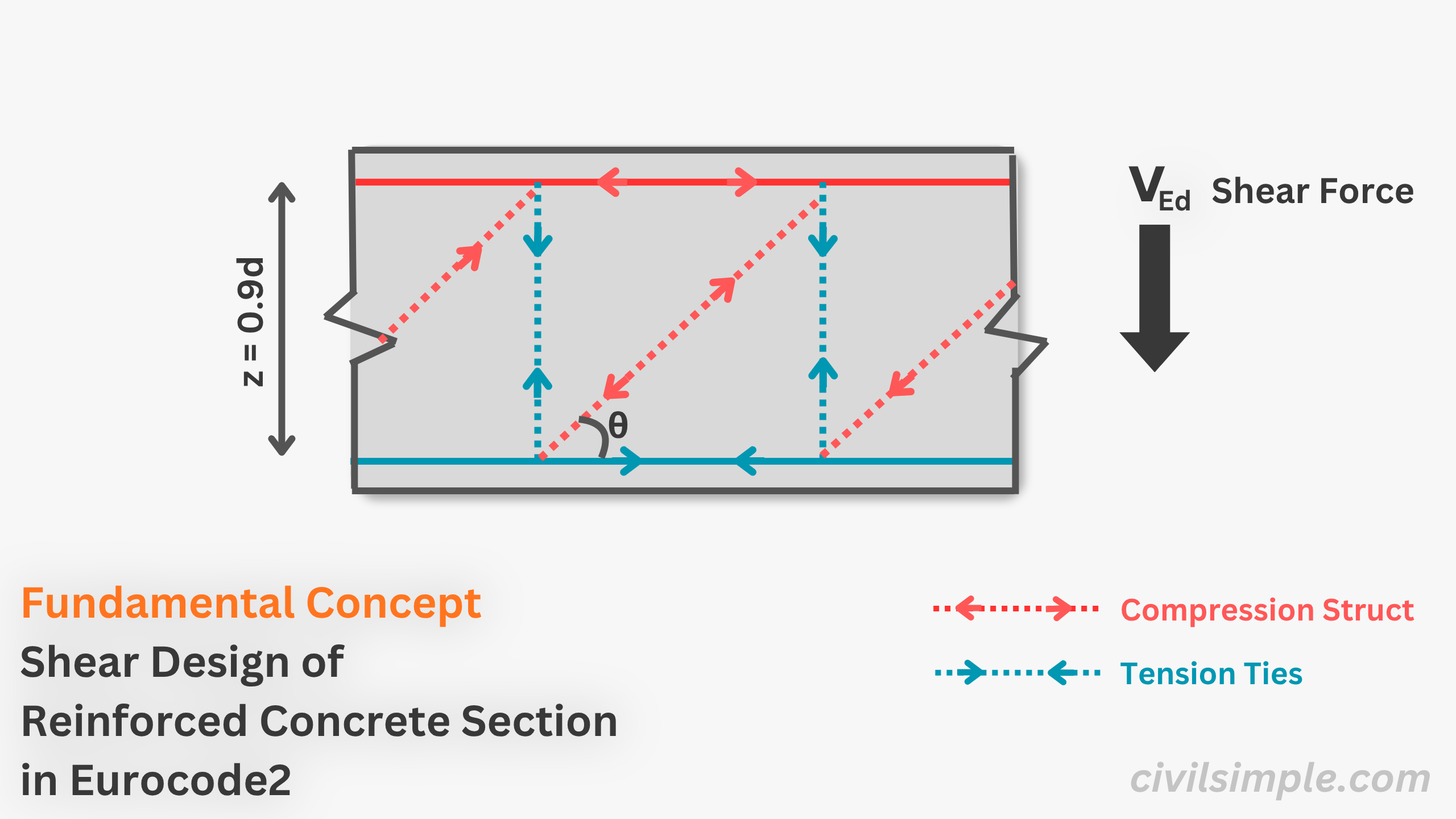
proofFundamental Concept of Shear Reinforcement Design of Reinforced Concrete Section in Eurocode 2
A overview about design method (Truss Model) used in eurocode 2 for shear design and corresponding derived of vertical shear reinforecement equations 6.8 and 6.9 of BSEN1992-1-1:2004.
-
 proof
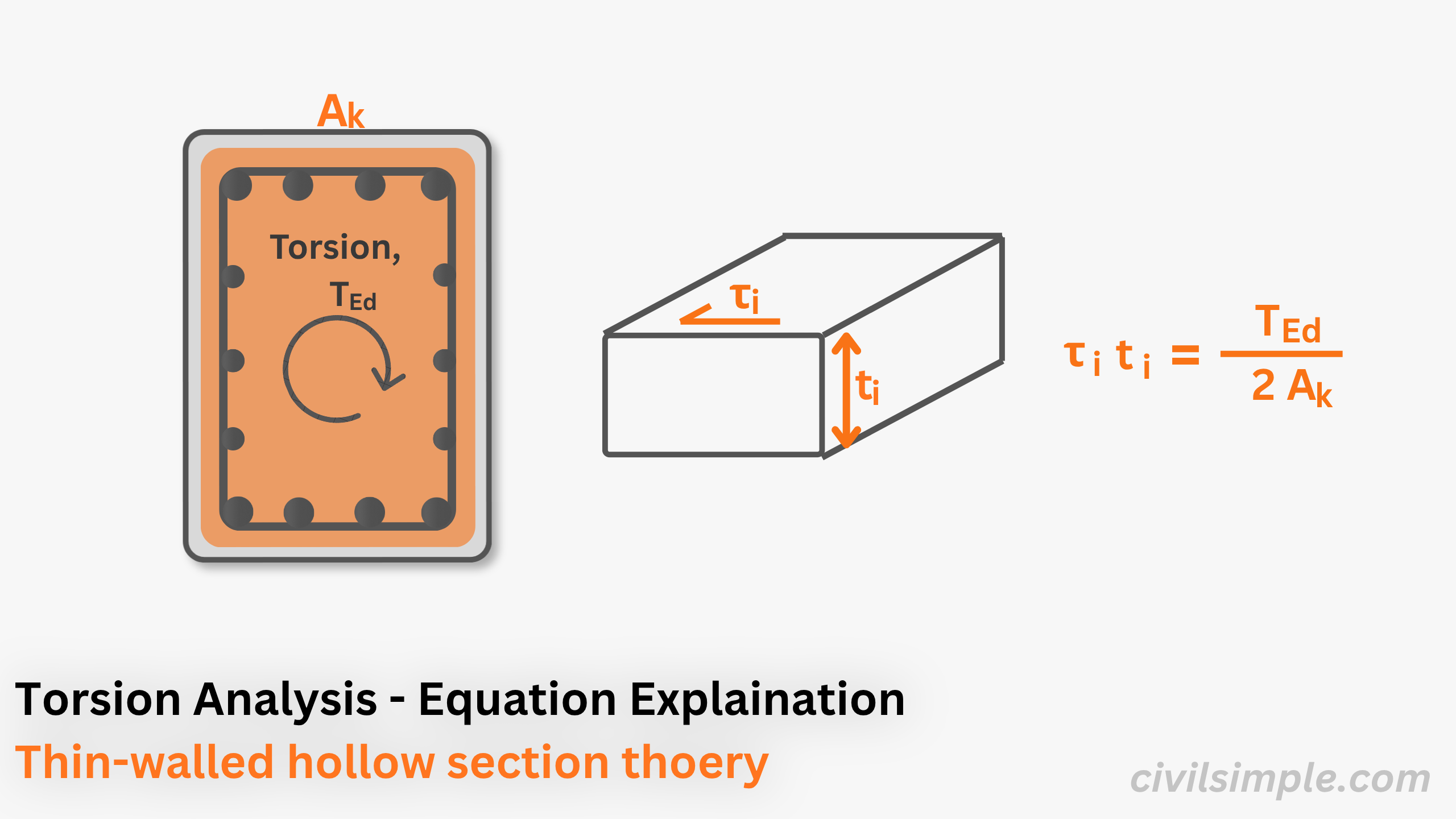
proofThin-Walled Torsion Equation (EC2) - Derivation & Interactive Guide
Learn the derivation of the EC2 thin-walled torsion equation through interactive SVG diagrams, shear flow, and force equilibrium explained step by step.
-
 glossary
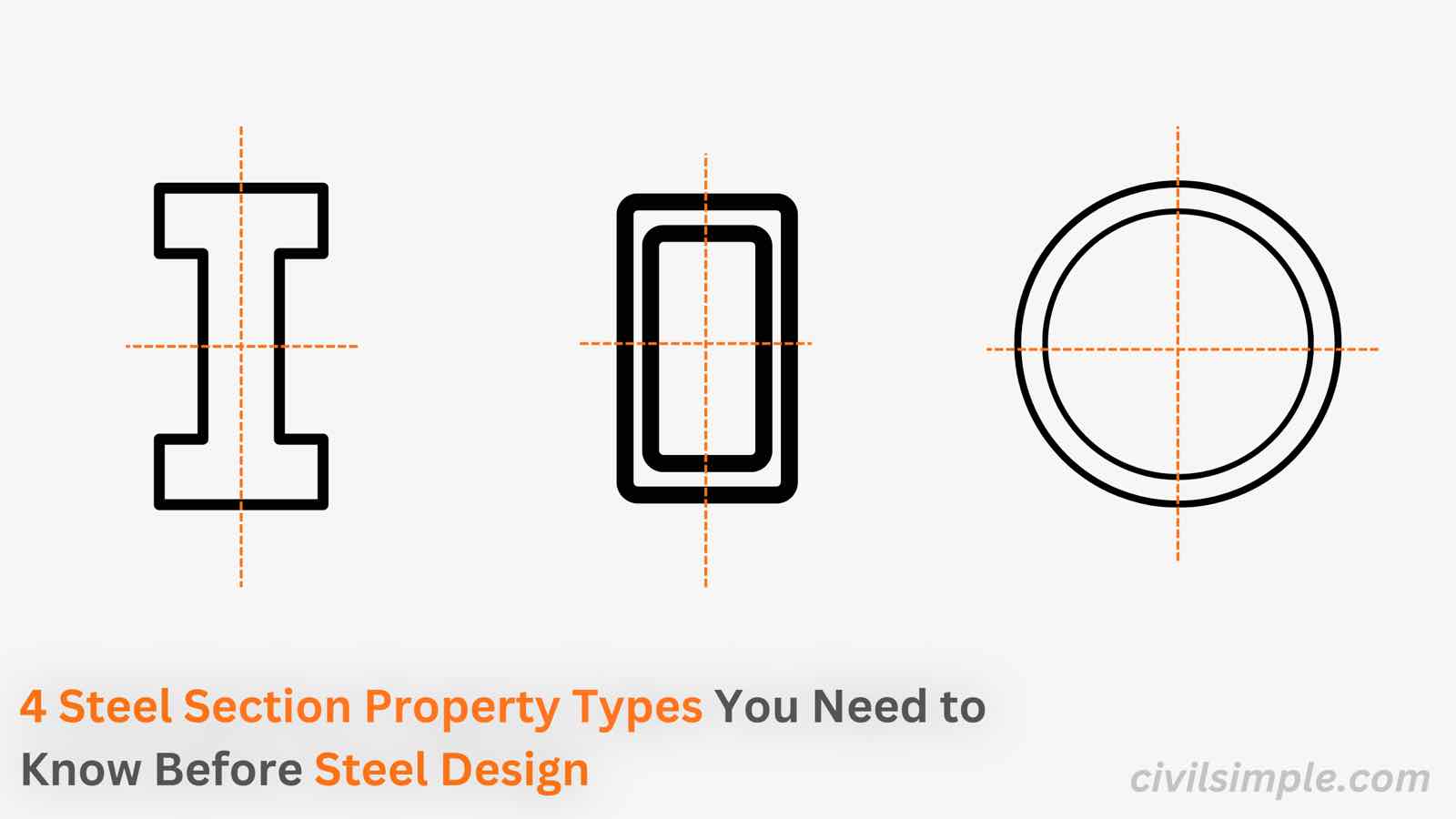
4 Steel Section Properties Every Steel Designer Should Know
A simple guide to the 4 key steel section properties — area, moment of inertia, elastic & plastic modulus — with a comparison of I-section, RHS, and CHS.
-
 glossary
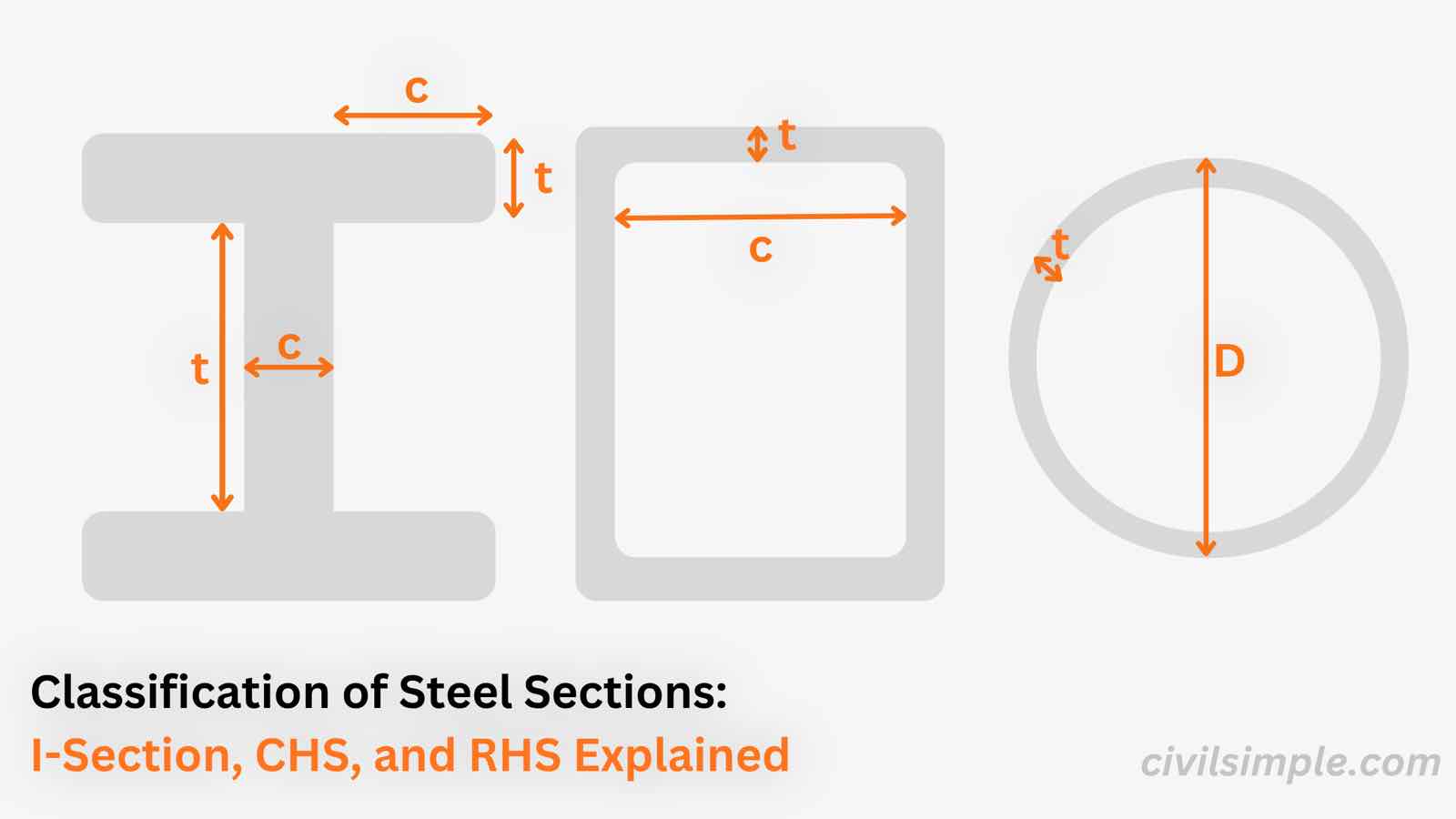
Classification of Steel Sections - I-Section, CHS, and RHS Explained
Learn how steel sections are classified — plastic, compact, semi-compact, and slender — with practical rules for I-sections, CHS, and RHS.
-
 glossary
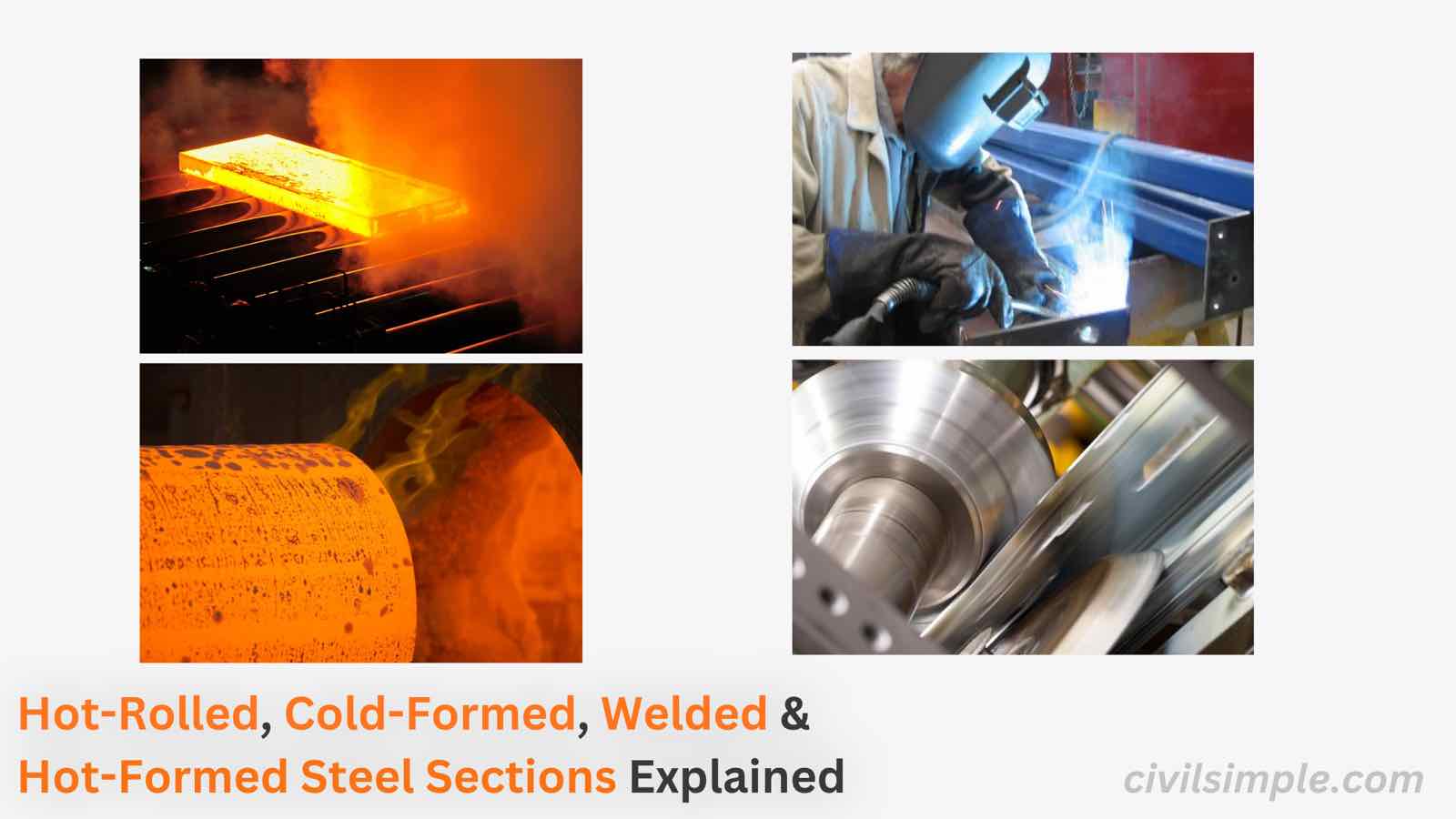
Hot-Rolled, Cold-Formed, Welded & Hot-Formed Steel Sections - Explained and Their Impact on Design
A simple introduction to the four ways steel sections are made — hot-rolled, cold-formed, welded, and hot-formed — and how each one changes residual stress, yield strength, and the Eurocode 3 buckling curve you use.
-
 glossary
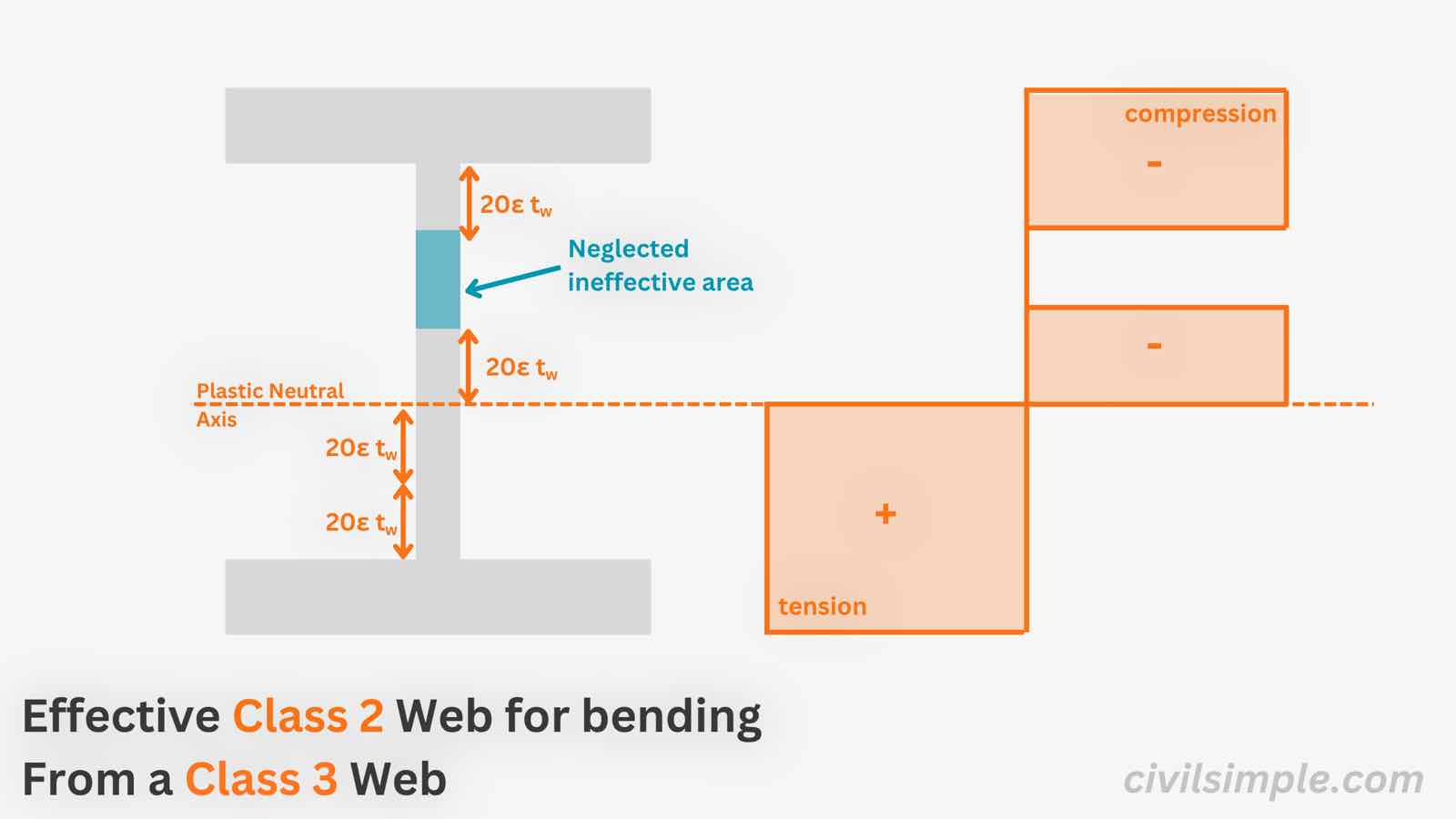
Effective Class 2 Web in Steel Sections - Recover the Plastic Moment (Eurocode 3)
A simple guide to the effective Class 2 cross-section for bending resistance enhancement of steel I section in Eurocode 3 - how to identify and the corresponding formula and explain.
-
 glossary
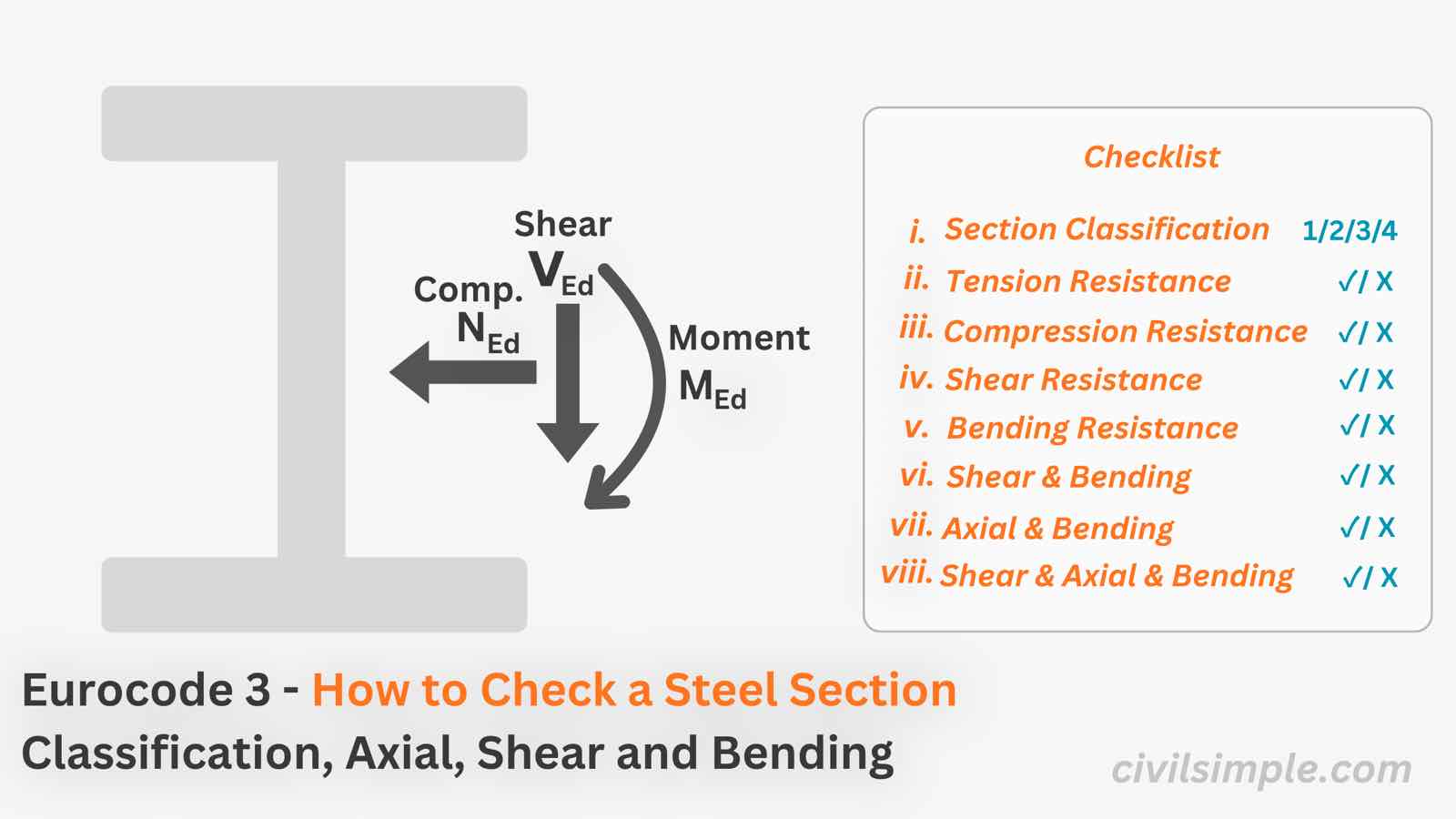
Cheat Sheet for a Steel Section Check - Classification, Axial, Shear and Bending (Eurocode 3)
A quick cheat sheet about steel section capacity check to Eurocode 3 — classification, bending, shear and axial resistance for I-sections, CHS and RHS, with formulas.
-
 glossary
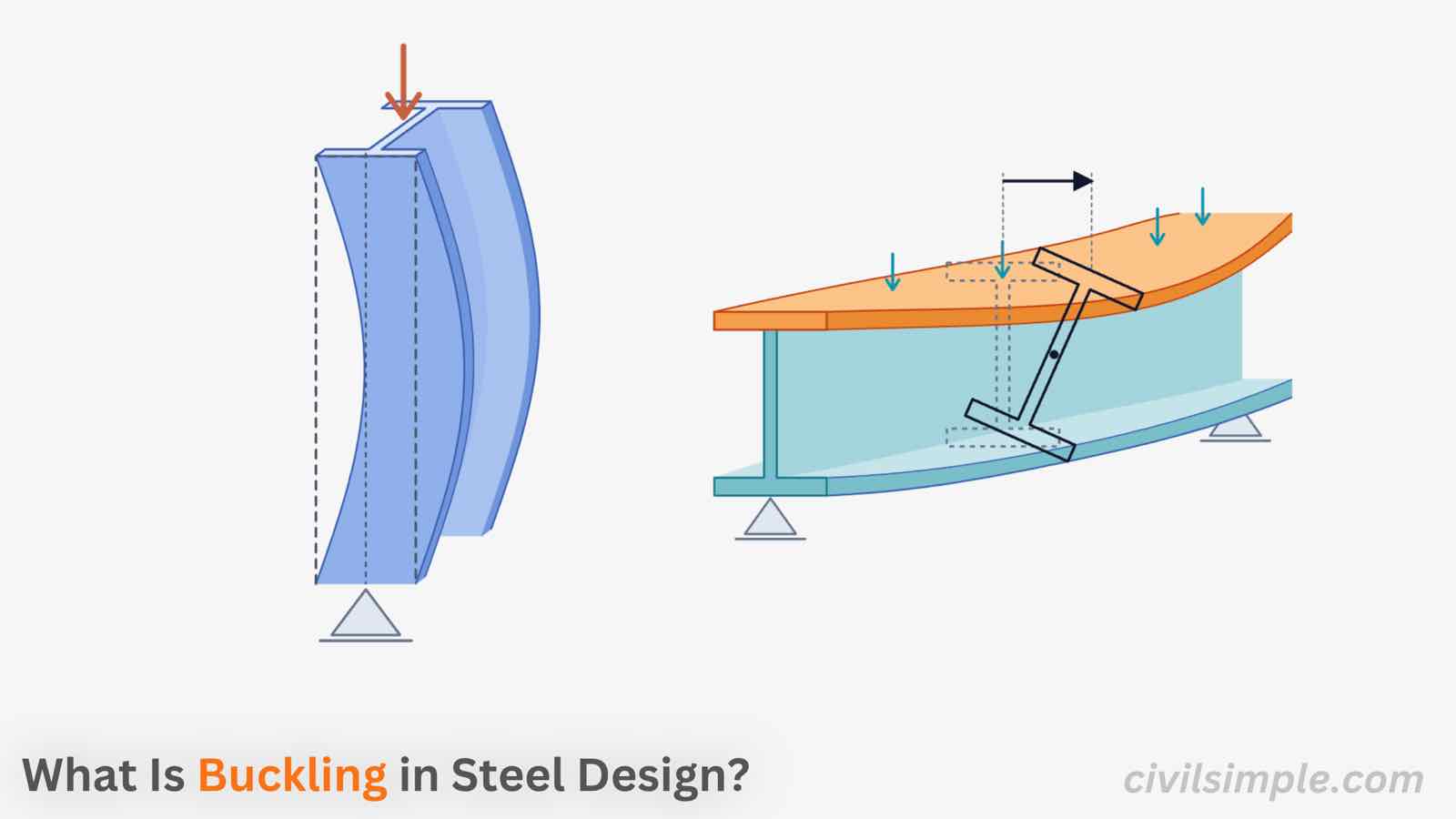
What Is Buckling in Steel? Types, Causes and Effective Length
Simple Guide about what buckling in steel is, why slender members fail suddenly, the five types of buckling, effective length, factors affecting critical buckling load and ways to reduce it.
-
 glossary
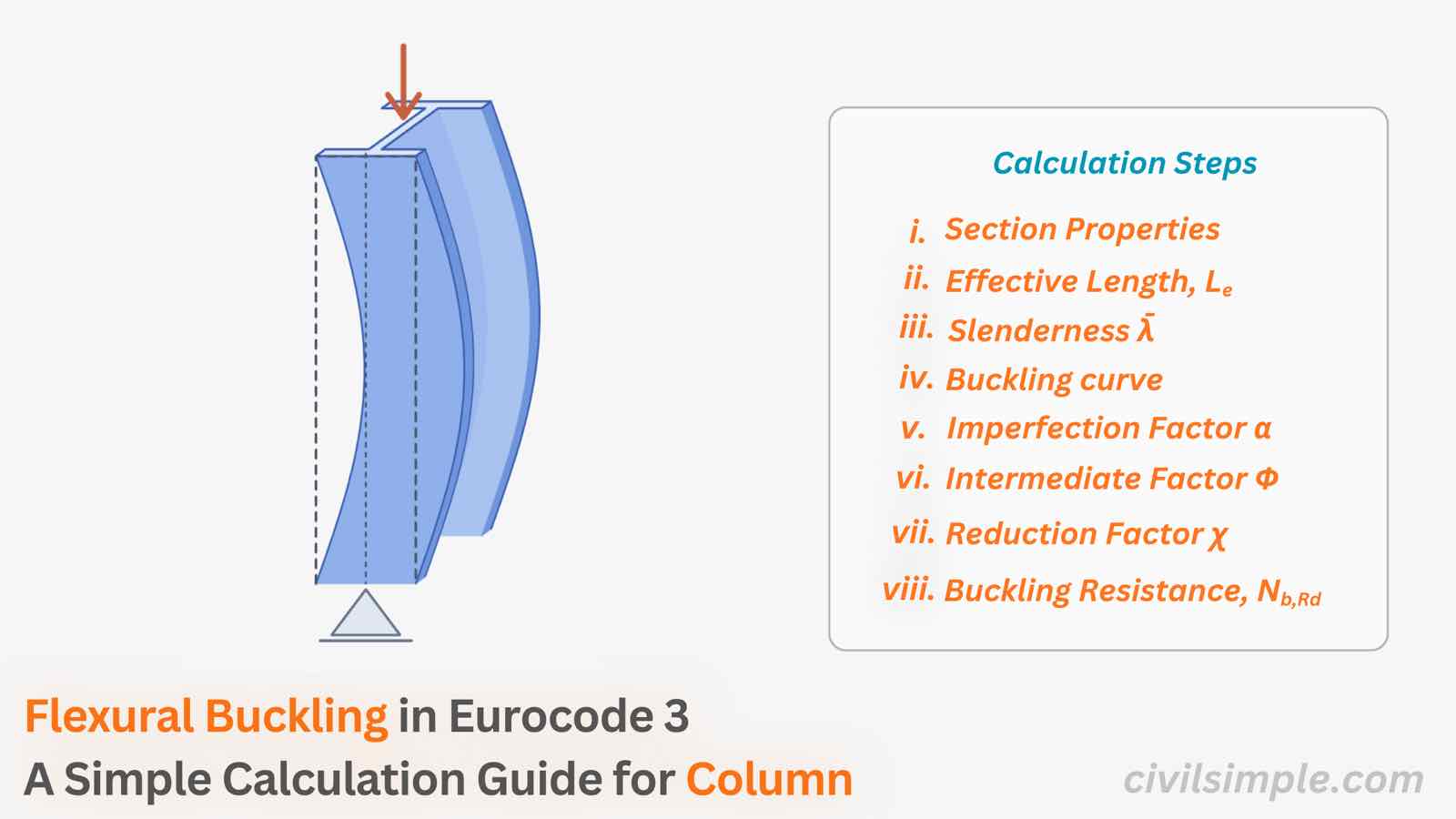
Flexural Buckling in Eurocode 3 - A Simple Calculation Guide for Columns
A simple step-by-step guide to the flexural buckling check of steel columns to Eurocode 3 (EN 1993-1-1) — parameters, buckling curves, slenderness, the reduction factor χ and a step-by-step calculation guideline.
-
 glossary
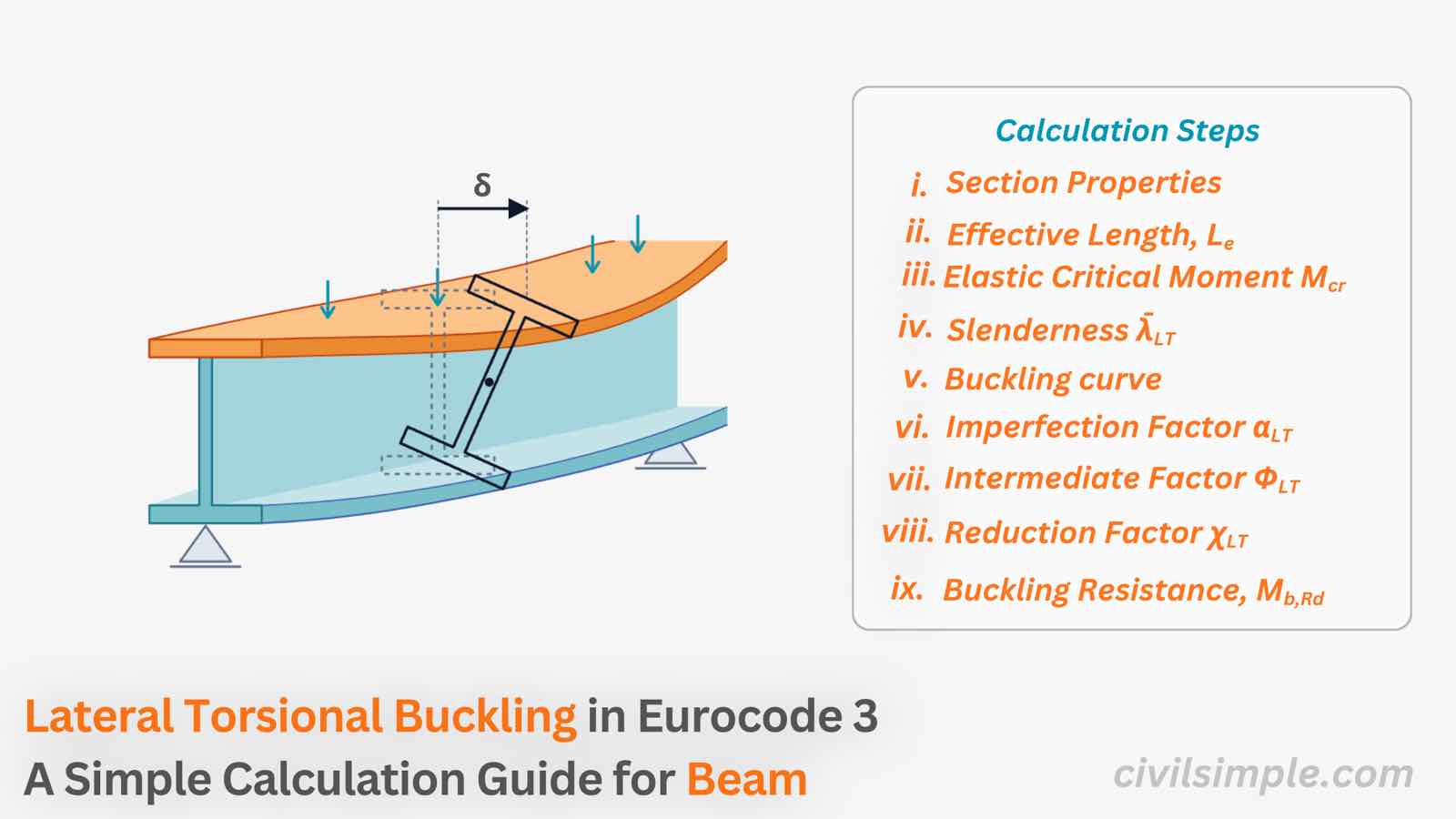
Lateral Torsional Buckling in Eurocode 3 - A Simple Calculation Guide for Beams
A simple step-by-step guide to the lateral torsional buckling check of steel beams to Eurocode 3 (EN 1993-1-1) — the elastic critical moment Mcr, slenderness, the reduction factor χLT and a step-by-step calculation guideline.
-
 glossary
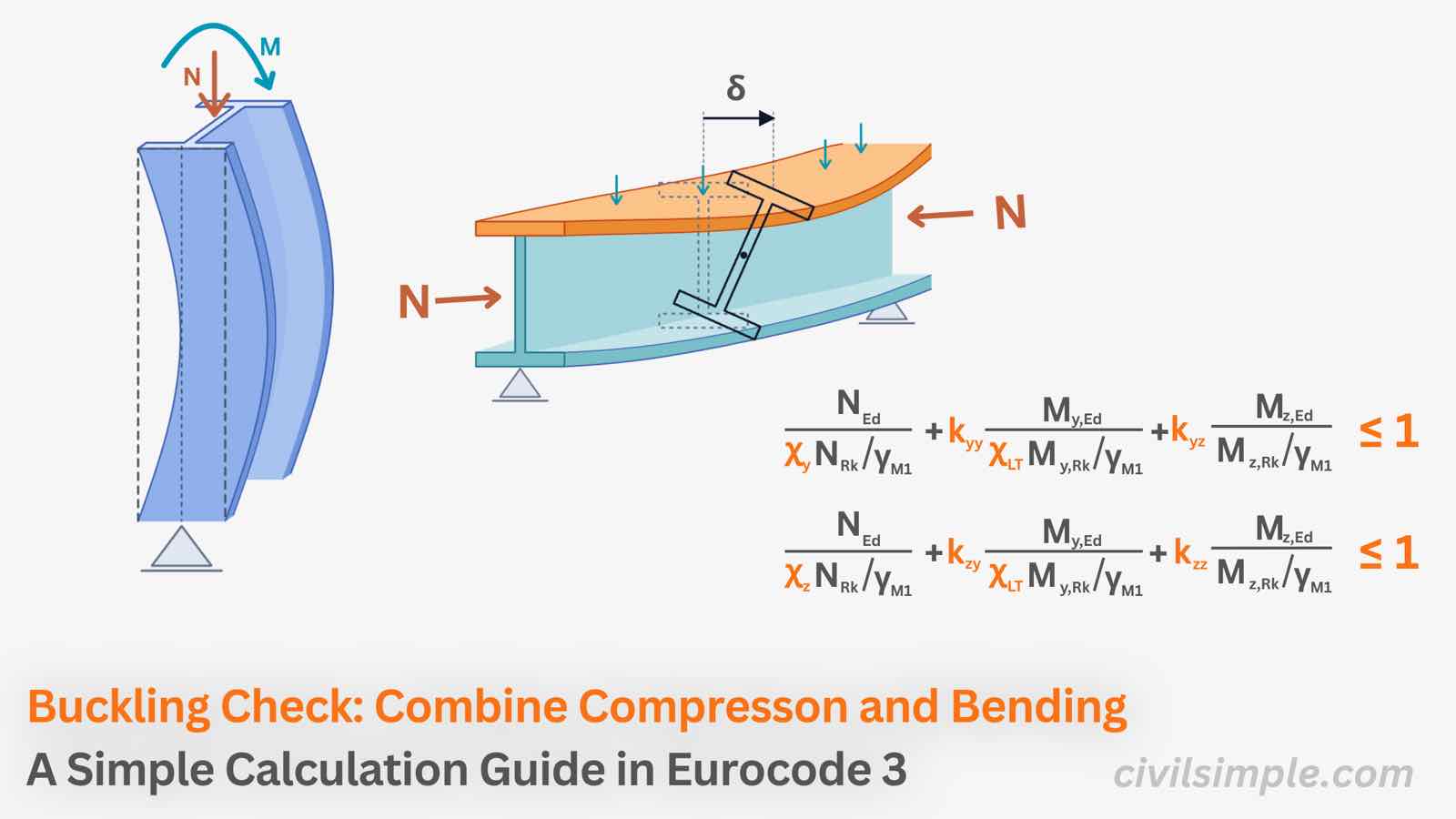
Combined Compression and Bending Buckling Check in Eurocode 3 - A Simple Calculation Guide for Beam-Columns
A simple step-by-step guide to the combined compression and bending check of steel beam-columns to Eurocode 3 (EN 1993-1-1) — the interaction equations 6.61 and 6.62, the Annex B interaction factors, equivalent uniform moment factors Cm and a step-by-step calculation guideline.